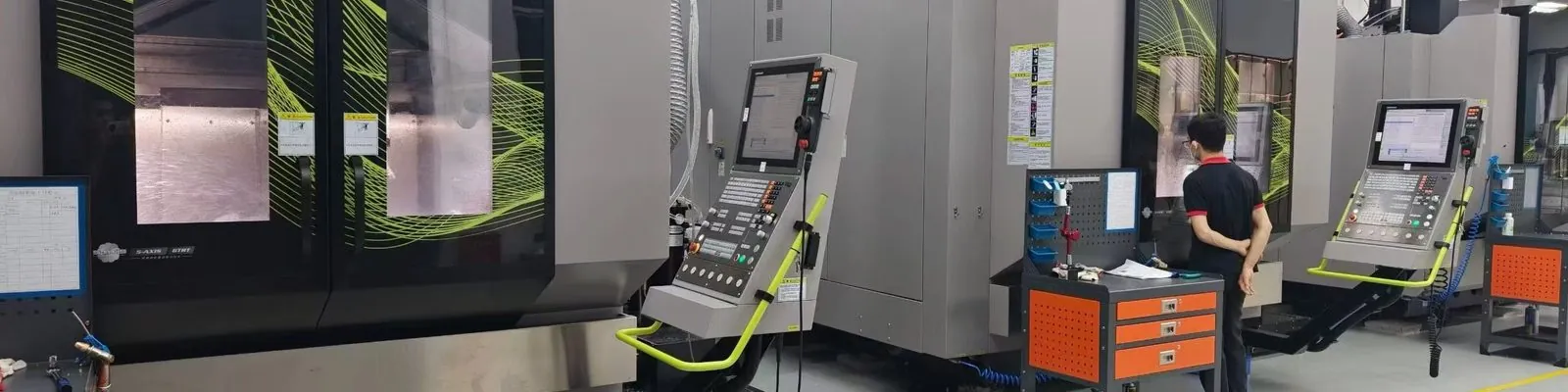
A traditional route for a turned part with milled features is: turn it on a lathe, move it to a mill, fixture it again, cut the flats and cross-holes. A mill-turn centre does both without releasing the part.
What that changes
Position accuracy between turned and milled features. This is the real benefit. When a cross-hole must be located precisely relative to a turned diameter, every re-fixturing spends part of your tolerance budget. Cutting both in one setup removes that error source entirely.
Handling and lead time. Fewer moves between machines, less queueing, fewer opportunities for handling damage on finished surfaces.
Labour. One setup instead of two or three.
The parts where it pays
- Shafts with keyways, flats or cross-drilled holes
- Threaded fittings with wrench flats
- Manifolds and connectors with ports at angles to the main bore
- Any round part where a milled feature has a position tolerance referenced to a turned datum
The parts where it does not
A plain turned part with no milled features gains nothing. A largely prismatic part with one small turned feature is usually better on a machining centre. And at very high volumes, dedicated single-purpose machines running in parallel can beat one machine doing everything sequentially.
What to put on the drawing
You do not need to name the process. What helps is:
- Datum references that make the relationship explicit — if the cross-hole is located from the turned diameter, say so with a datum rather than dimensioning from an edge
- Position tolerance on the milled feature relative to that datum
- A note on which surfaces are functional
Given that, a supplier can see immediately whether the part wants a single-setup route.
A practical check
If your drawing dimensions a milled feature from a turned feature with a tolerance tighter than about ±0.05 mm, you are almost certainly better off with a single-setup process — and it is worth asking your supplier directly whether they are quoting it that way. Two suppliers quoting the same part, one in one setup and one in three, will produce different prices and different capability, and the quote alone will not tell you which is which.