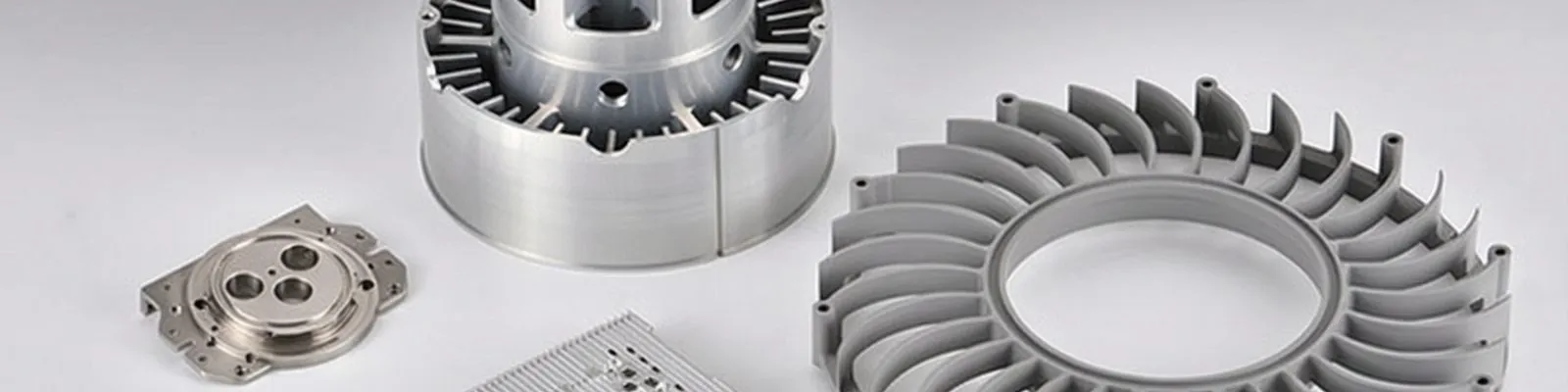
These two alloys cover a large share of the machined aluminium we run. They are not interchangeable, and choosing on price alone tends to cost more later.
6061 — the general-purpose choice
Good machinability, good weldability, good corrosion resistance, and it anodises cleanly and predictably. For brackets, housings, plates and most structural parts that are not close to their strength limit, 6061-T6 is the sensible default.
It is also the cheaper of the two and more widely stocked, which matters for lead time.
7075 — when strength decides
Considerably stronger, particularly in tension. Used where a part must carry load in a small envelope: aerospace fittings, high-stress brackets, tooling components.
The trade-offs are real. It is less corrosion-resistant than 6061 and generally requires protection. It does not weld well by conventional methods. It costs more and is less commonly stocked in every size. And it anodises to a less uniform colour, which matters if the part is visible.
The decision in practice
Ask two questions:
Is the part strength-limited? If a stress calculation or a previous failure says yes, 7075 earns its cost. If the part is stiffness-limited rather than strength-limited, both alloys have nearly the same modulus — 7075 buys you nothing, because stiffness does not improve with alloy strength.
That last point is worth repeating, because it is the single most common misconception we encounter. If a bracket is flexing too much, switching to 7075 will not fix it. Changing the geometry will.
Where will it live? Outdoors, marine, or in contact with dissimilar metals pushes towards 6061 or towards 7075 with a proper protective finish.
Anodising behaviour
6061 takes clear and coloured anodise evenly. 7075 tends towards a slightly darker, less consistent result, particularly across different material lots. For cosmetic parts in 7075, expect to agree a colour tolerance with your supplier and to accept some batch variation.
Availability and lead time
In our own stock planning, 6061 is available in most sections at short notice. 7075 in less common sizes can add days to the lead time before machining even starts. If schedule is tight, this is worth asking about at quote stage rather than discovering later.
The short version
Default to 6061 unless a strength requirement says otherwise. Do not switch to 7075 to solve a stiffness problem. And if the part is cosmetic and anodised, factor in the colour consistency difference before committing.